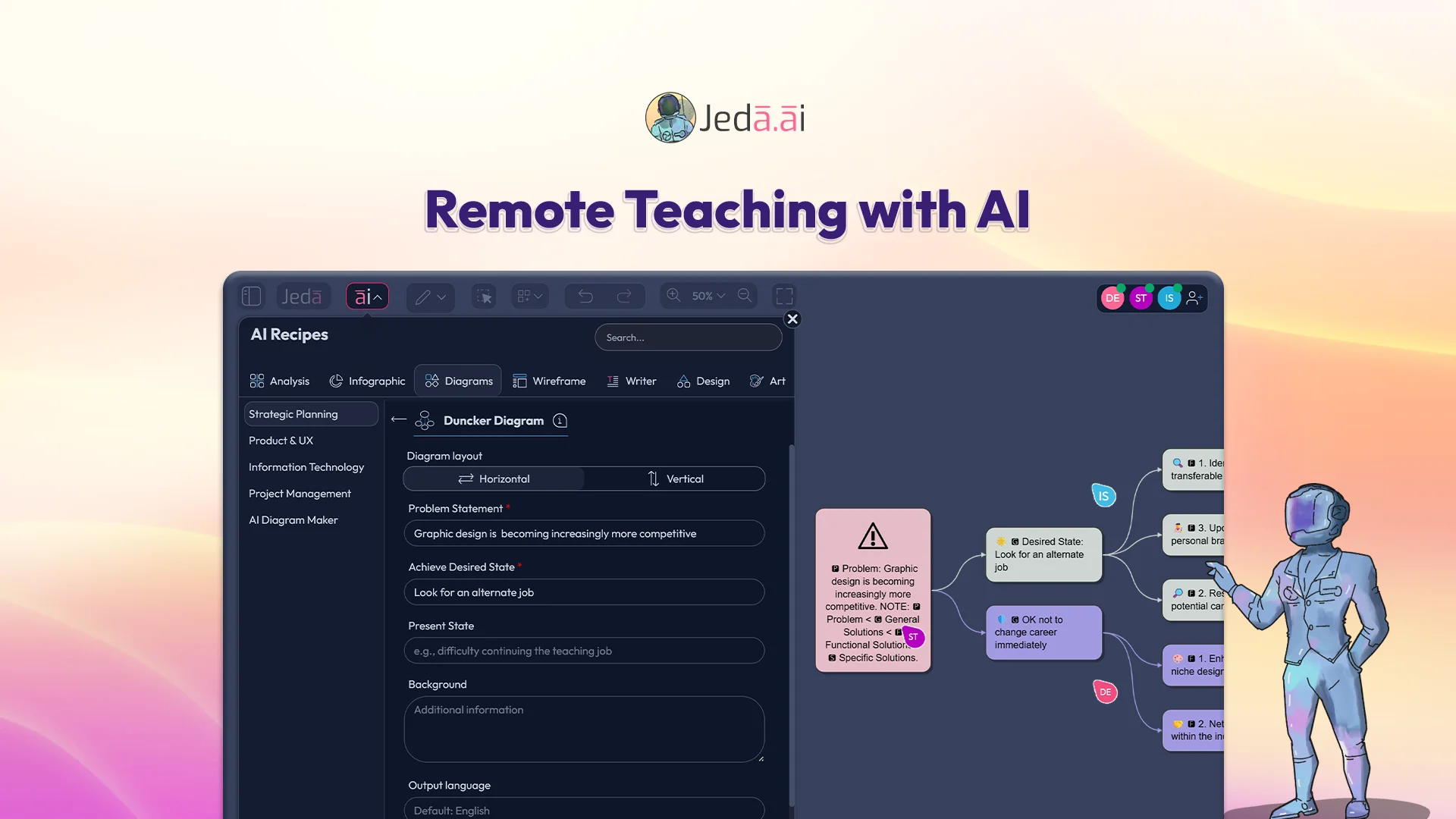
Remote Teaching with AI: Crush Online Teaching Burnout with Jeda.ai
November 27, 2025
Finally Master Remote Teaching with AI and Reclaim Your Classroom with Jeda.ai
Remote Teaching with AI is about to change everything for online educators. If you've felt the frustration in Remote Teaching, you're not alone. That grid of silent black screens can make even the most passionate professor question their impact. It often feels like you're presenting to a void.
We've all created the "PDF graveyard." Uploading slides and case studies to the LMS, hoping students will engage. But static documents don't foster discussion or collaboration. This approach turns teaching into content administration, missing the dynamic interaction that real learning requires.
Juggling fifteen browser tabs during a lecture is mentally exhausting. You’re toggling between video, documents, a whiteboard, and chat. This cognitive overload fractures your focus, making it hard to deliver smooth, compelling lessons that keep executive students engaged and invested.
Imagine if your core concepts could auto-visualize. A complex business model could become a clear diagram instantly. This is the power of a visual AI workspace that transforms abstract theory into tangible, interactive visuals and make learning stick for busy professionals.
The goal isn't just more technology; it's creating a fluid, collaborative space where ideas come to life. This shift from static screens to dynamic, interactive canvases is the true promise of AI in Remote Teaching.
Why "Smarter" Tools Aren't Solving the Engagement Crisis in Remote Teaching with AI
The Analytics Trap: When Data Masks Real Learning
You've seen the dashboard. It shows login counts, click-through rates, and time spent. These platforms promise insight with colorful charts tracking student activity.
But here's the problem: data isn't learning. Knowing a student clicked on a PDF doesn't mean they understood complex business strategy. Seeing they watched 80% of a lecture video reveals nothing about their comprehension of business models.
We're measuring attendance instead of understanding. True learning happens between the data points, in the struggle with a concept, the moment of clarity, the application of knowledge. Current analytics can't capture these nuances in Online Teaching.
Blank Canvas Anxiety: The Creative Burden on Educators
Remember being told to use a digital whiteboard? You likely faced the dreaded empty screen. That blank space demands immediate creativity while you're also explaining concepts and managing student questions.
Trying to draw a business model or supply chain diagram with a mouse often creates confusion, not clarity. The tool should enhance teaching, not become another problem to solve. Instead of focusing on pedagogy, you're focused on perfect lines and shapes.
This creates what many educators call "cognitive overload", juggling multiple mental tasks while teaching. The technology that promised to simplify now complicates. The freedom of a blank canvas becomes a barrier to effective Remote Education.
App Smash Chaos: The Fractured Learning Experience
Many institutions respond to engagement issues with more tools. Soon you're using one platform for video, another for quizzes, a third for documents, and more for collaboration.
Students toggle between five different interfaces during a single session. The learning experience becomes fragmented. Context gets lost in transition between apps. Technical issues multiply with each additional platform.
This "app smashing" creates what learning professionals identify as a significant barrier, the constant switching between systems that do not communicate seamlessly. The mental energy students should devote to learning is diverted to navigating digital obstacles instead.
The Integration Illusion: When Connected Tools Aren't
Many platforms promise seamless integration. In reality, this often means clumsy single-sign-on that still leaves data siloed across systems.
Your quiz results live in one place, discussion participation in another, and project work elsewhere. No unified view of student progress exists. You piece together understanding from disconnected fragments.
This patchwork approach creates more work, not less. You become a data detective instead of an educator. The promise of streamlined AI in Remote Teaching remains unfulfilled by these supposedly connected systems.
The Missing Link: From Tools to Thinking Partners
The common failure of these alternatives is their fundamental nature as tools. They expect you to provide all the creativity, structure, and intelligence.
What if instead of giving you another blank slate, your platform could visualize concepts automatically? Imagine dropping in a case study and having it transformed into a structured diagram instantly.
The future of Online Teaching with AI isn't more tools, it's an Agentic AI Whiteboard that thinks with you. We need systems that understand content, generate visual representations, and adapt to learning needs dynamically.
This shift from manual tools to agentic AI partners represents the next evolution in digital learning. The true breakthrough in AI in Remote Teaching will come when technology amplifies teaching intelligence rather than demanding more technical effort.
The solution isn't another tool to master, but a partner that understands both education and visualization, finally bridging the gap between complex concepts and student comprehension in remote learning environments.
A New Era: AI in Remote Teaching with the Visual Workspace
Welcome to the future of digital learning, where Remote Teaching with AI transforms static lessons into dynamic experiences. Imagine converting complex case studies into clear visual frameworks instantly. That's the power of a true Visual AI Workspace; it thinks alongside you.
Beyond Intelligence: Your Teaching Superpower
This isn't about replacing educators with robots. The real breakthrough in Remote Teaching with AI comes from augmentation. Think of it as gaining a teaching assistant that handles the visual heavy lifting while you focus on what matters most: guiding understanding and fostering critical thinking.
Example:
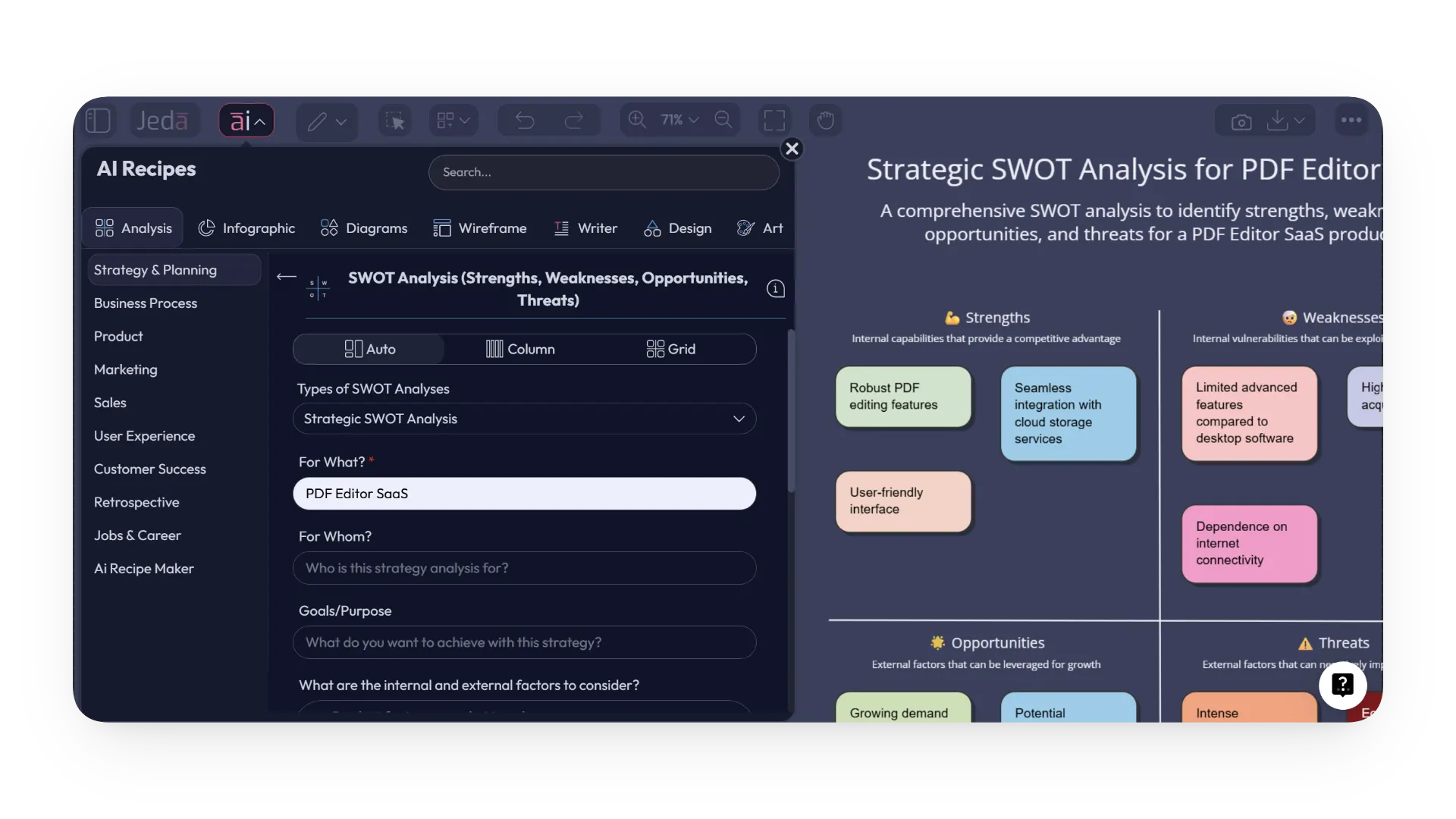
Drop a dense market analysis report onto the canvas and watch the AI generate a complete SWOT analysis. You're not starting from scratch; you're starting from insight.
Visualizing Abstract Concepts Instantly
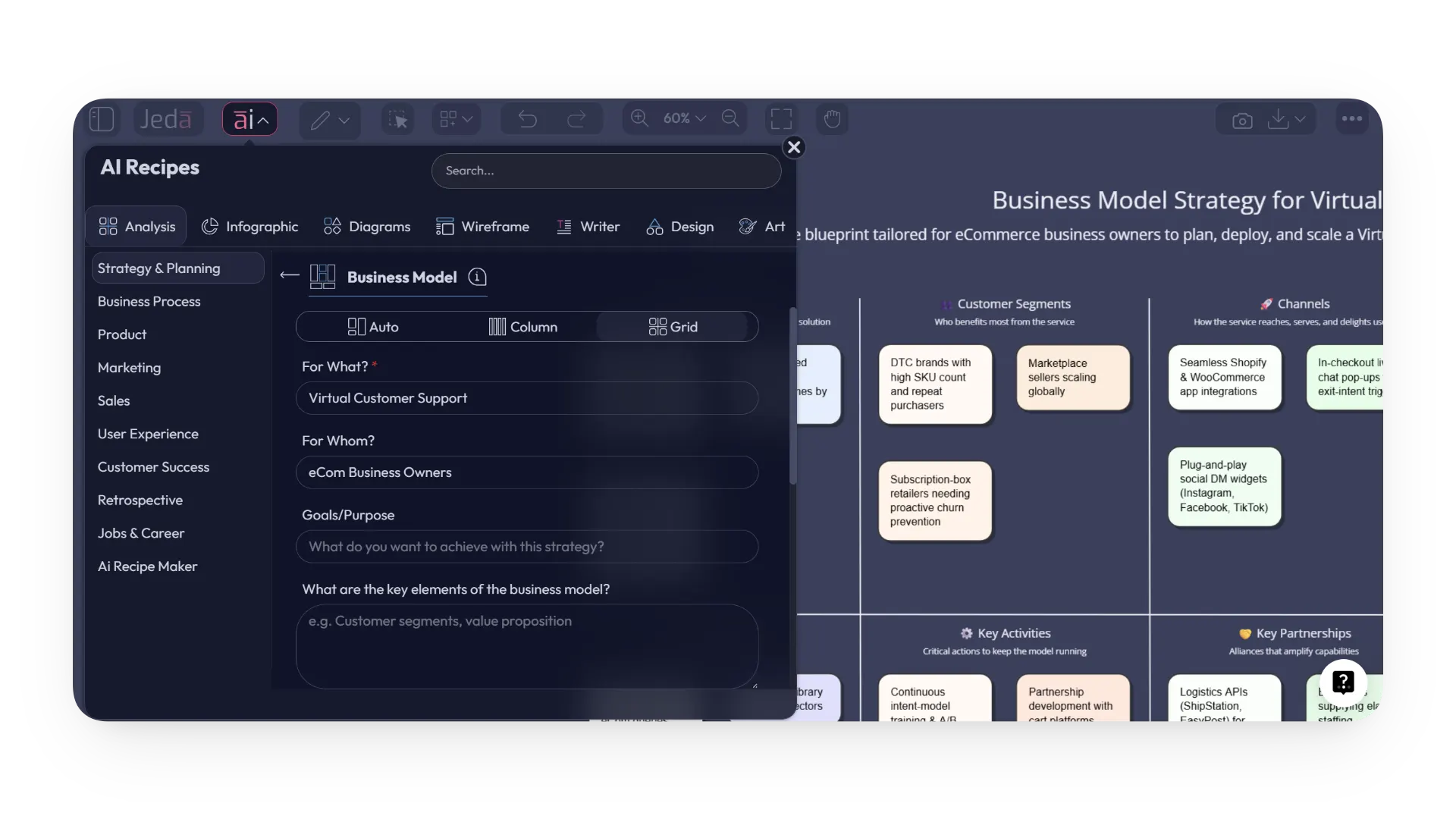
The magic happens when text transforms into understanding. A true Visual AI Workspace can convert paragraphs about supply chain management into clear flowcharts. It turns theoretical concepts into tangible diagrams that make learning stick for your executive students.
🪄 Input: Upload a complicated business model/report.
🪄 Process: The Multi-model AI Agent analyzes and structures content.
🪄 Output: Get a professional-looking diagram ready for class discussion.
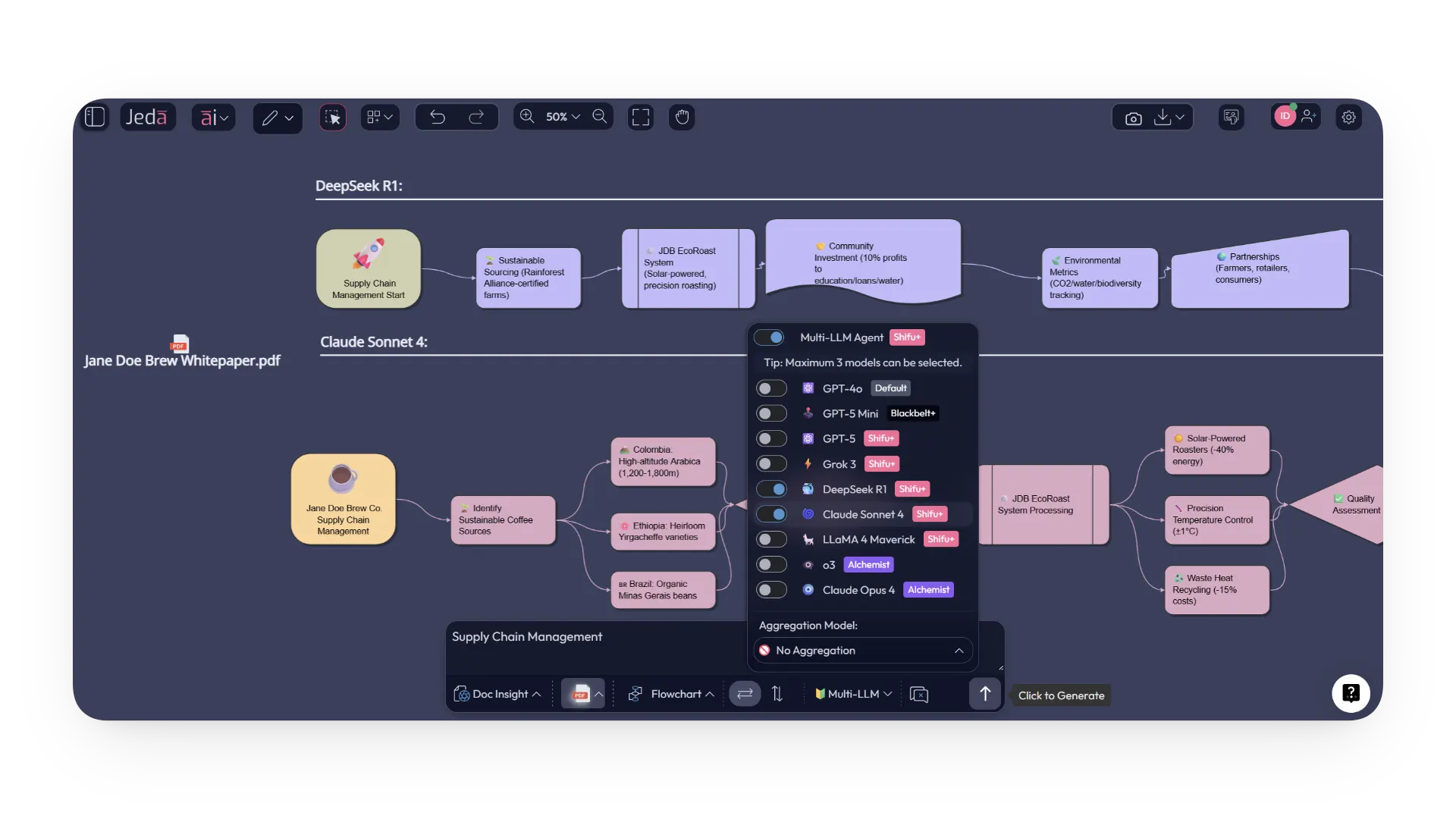
From Lecture Hall to Collaborative Hub
This is where Remote Teaching with AI fundamentally changes the game. Instead of broadcasting information, you're facilitating discovery. Students can interact with AI-generated visuals, moving elements around, adding comments, and testing different scenarios in real-time.
The shift looks like this:
🌟 Before: Teacher explains → Students listen.
🌟 After: AI visualizes → Students manipulate → Teacher guides exploration.
The Multi-LLM Advantage in Education
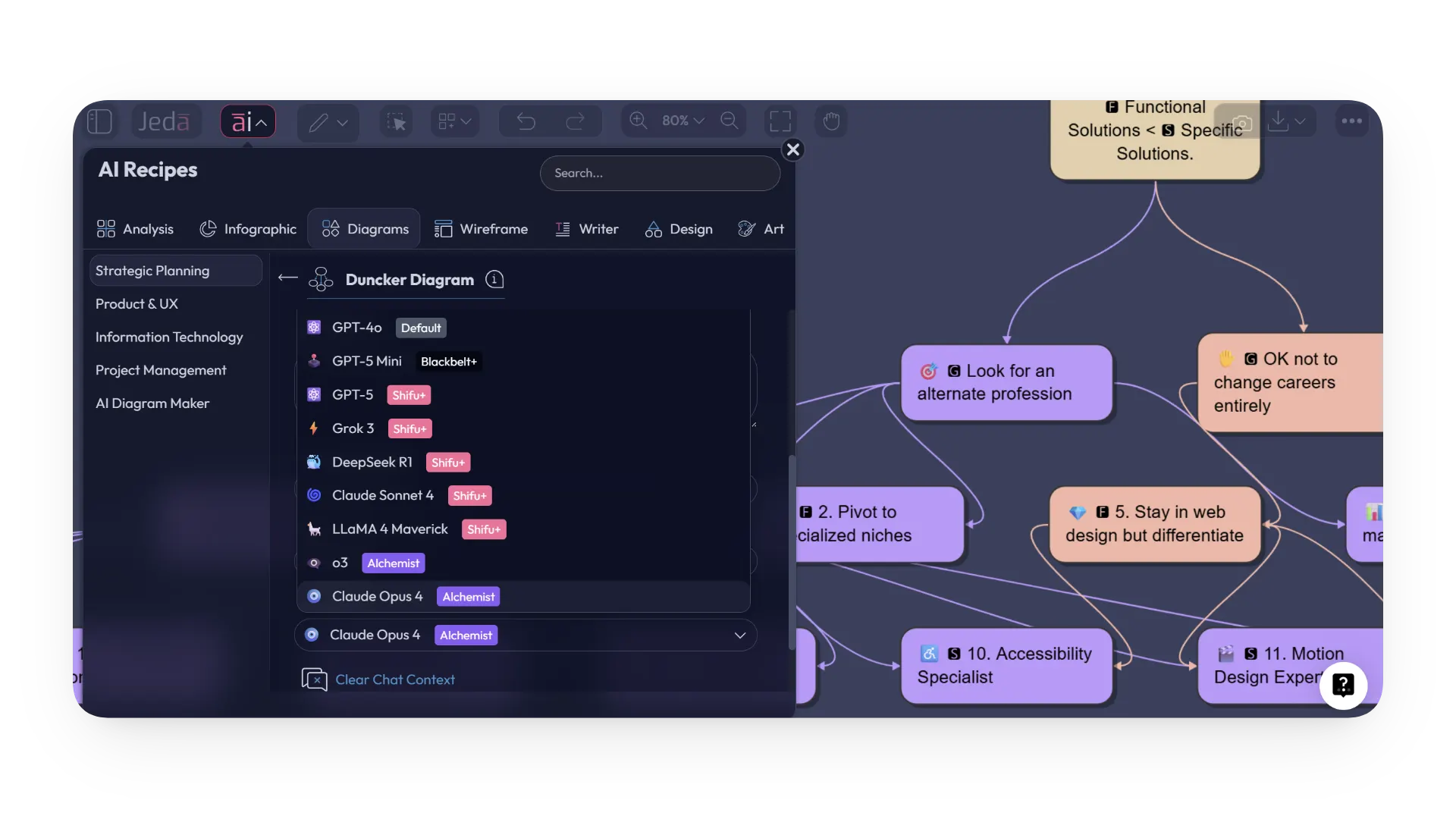
What if you could consult multiple teaching experts simultaneously? With Multiple Advanced AI Models working together, you get diverse perspectives on the same content. One AI might highlight key business strategies while another identifies potential implementation challenges, all visualized on the same canvas.
The future of AI in Remote Teaching is here, and it's visually intelligent, collaboratively powerful, and finally designed to make remote education feel as natural as classroom teaching.
How to Transform Lessons for Remote Teaching with Jeda.ai
Ready to revolutionize your classroom? Here's how Remote Teaching with Jeda AI works in practice. Start by uploading your case study or lecture notes to the visual canvas. The AI Document Intelligence instantly analyzes the content and identifies key concepts.
Watch the magic happen -
🪄 AI Analysis extracts main themes and relationships.
🪄 AI Mind Maps create visual connections between ideas.
🪄 AI Flowcharts map out processes and decision trees.
🪄 AI Infographics transform data into compelling visuals.
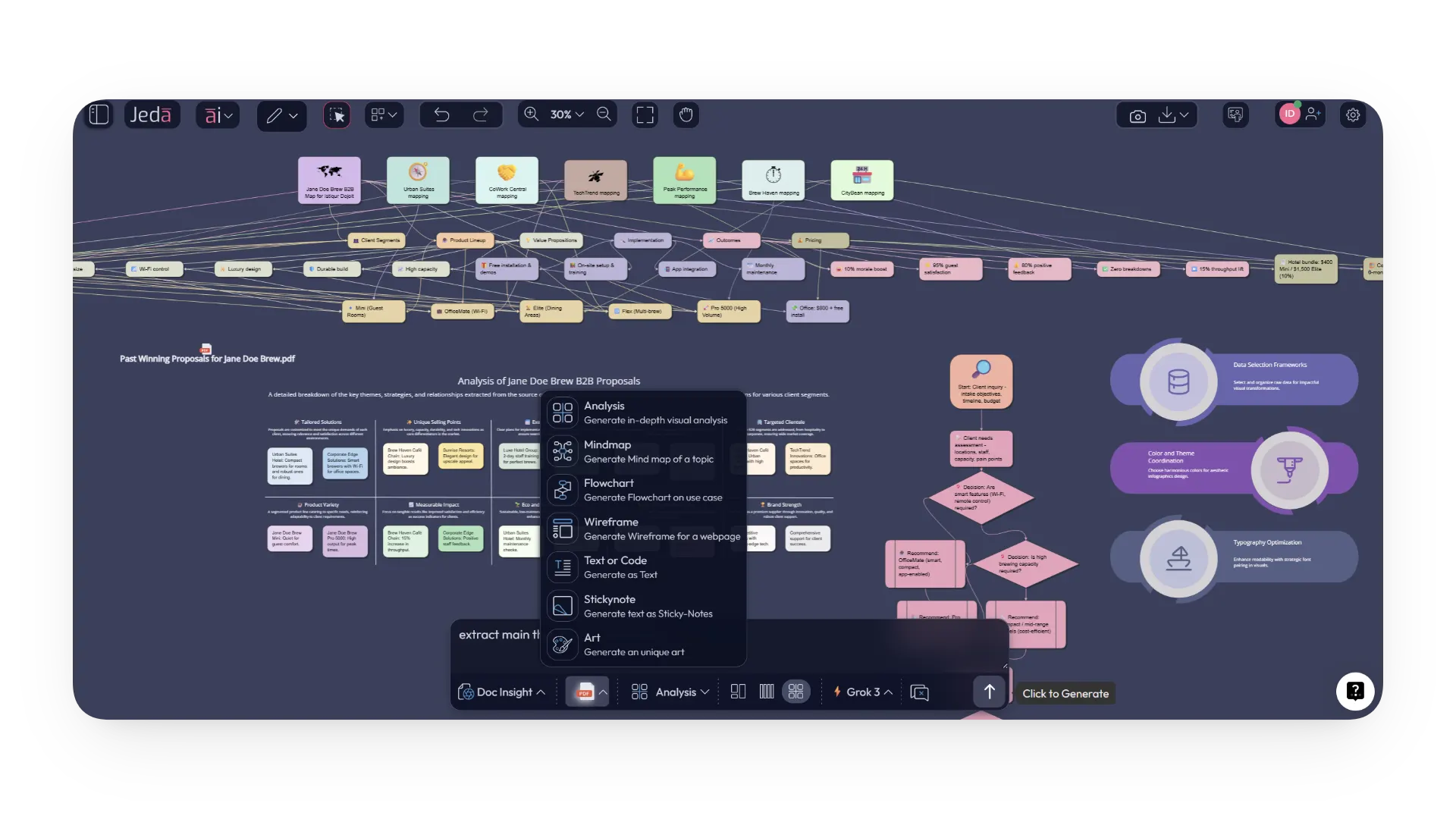
Within seconds, you have a complete visual lesson plan. But here's where AI in Remote Teaching gets exciting; invite students to collaborate live on the generated content. They can add AI Sticky Notes with insights, vote on key concepts, or rearrange elements.
Need to create supporting materials? The AI Text Writer helps draft discussion questions, while AI Art generates relevant imagery.
Teaching product development? Use AI Wireframe tools to sketch mockups. The AI Vision can even convert handwritten notes into clean digital diagrams.
Your Three-Step Transformation -
🌟 Input: Upload documents or data files.
🌟 Process: Multiple AI tools analyze and visualize.
🌟 Engage: Students interact with AI-generated content.
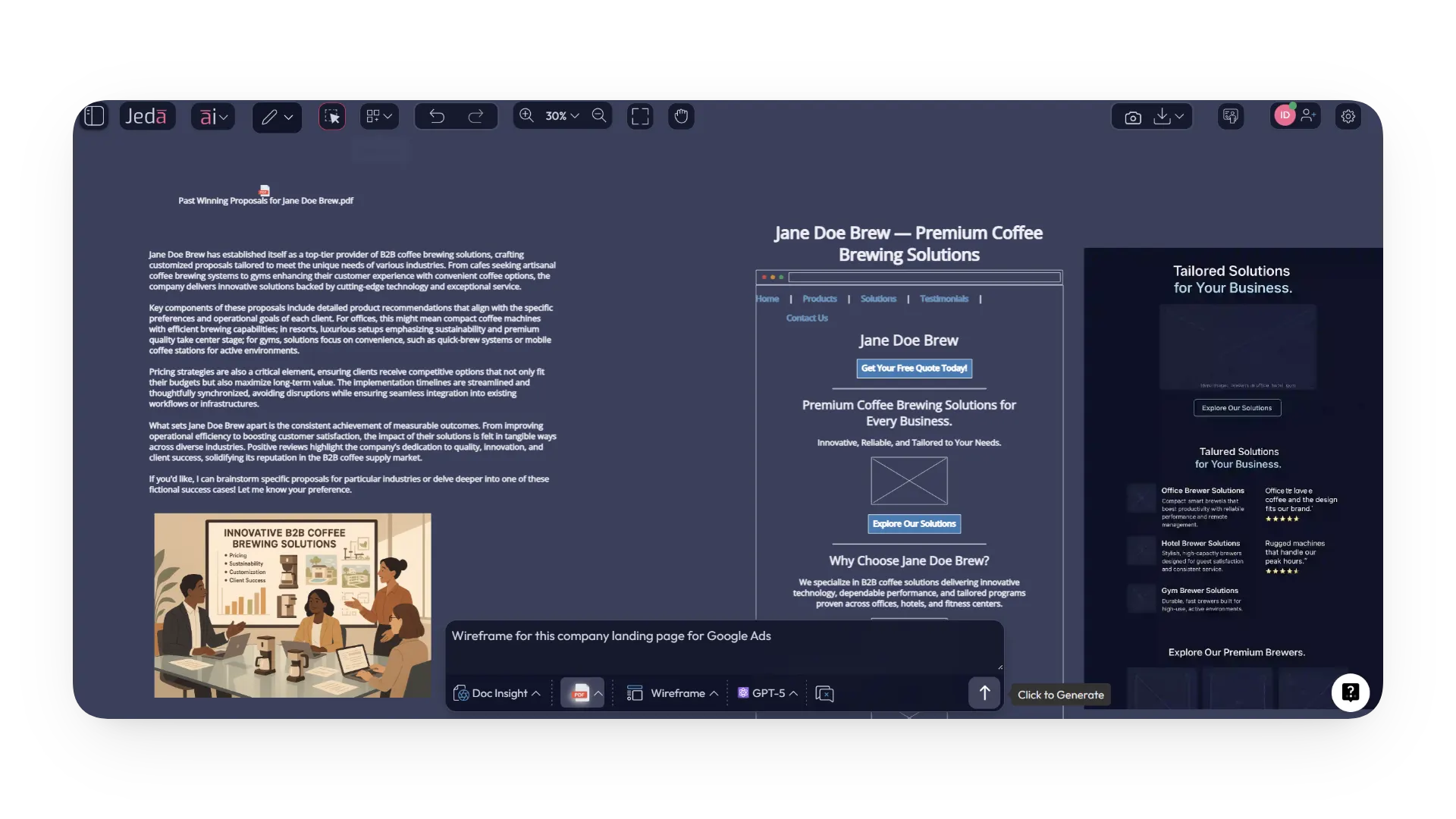
Solving the "Blank Screen" with AI in Remote Education System
That intimidating empty canvas disappears with the right AI in Remote Education System. The barrier to entry vanishes when you have intelligent templates and AI assistance built directly into your workspace. No complex software to learn, just open your browser and start creating.
The time savings are substantial:
✨ Convert research papers into visual summaries using AI Document Analysis.
✨ Transform spreadsheets into charts with AI Data Analysis.
✨ Generate discussion frameworks automatically.
✨ Create professional diagrams without design skills.
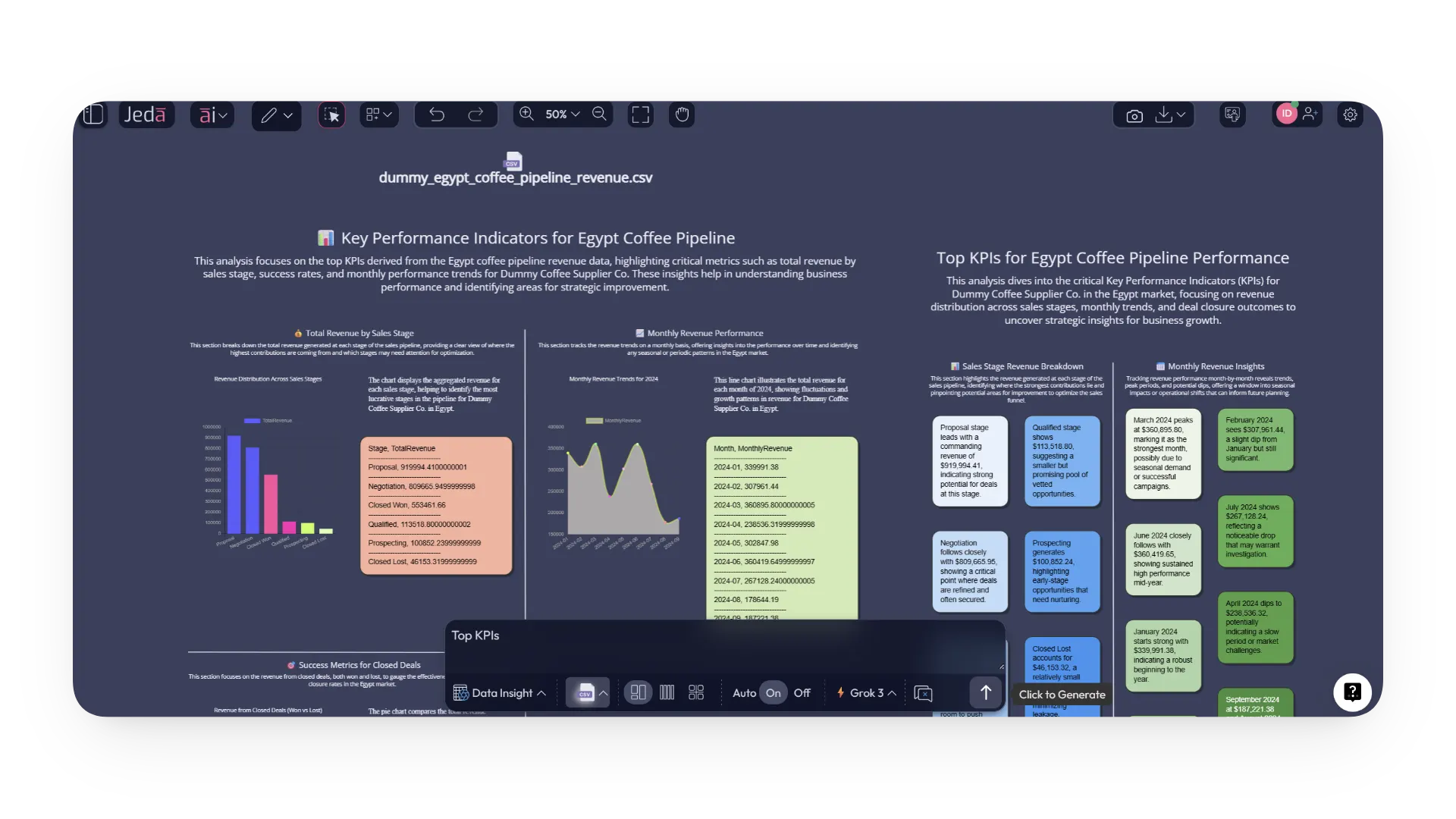
The beauty of this approach to Remote Teaching with Jeda AI is how it creates "sticky" learning. Visual content helps students retain complex information longer. When they can manipulate and interact with concepts rather than just reading about them, understanding deepens naturally.
Best of all? You're not spending hours preparing visuals. Jeda.ai handles the heavy lifting while you focus on guiding discussions and deepening understanding. That's the real power of AI in Remote Education System; it gives you back your precious preparation time while delivering better learning outcomes.
Wrapping Up - The Future is Agentic
Remote Teaching with AI lets you focus on mentoring, not manual tasks. You become a learning facilitator while AI handles the technical heavy lifting.
Dynamic Curriculum Creation
Imagine lessons that adapt in real-time. Generative Visual AI transforms static content into living frameworks that evolve with class discussion and student input.
The Collaborative Classroom
Students shift from passive observers to active participants. They can manipulate AI-generated models and contribute directly to visual workspace content.
Your Teaching Transformation
This evolution marks a fundamental shift in educational dynamics. It represents the true potential of AI in Remote Teaching.
Jeda.ai ushers in the new era of Remote Teaching with AI.


.png)


%202.svg)